
Clinical Trials for Agitation in Dementia

Agitation in Dementia of the Alzheimer’s Type can be challenging for both patients and caregivers. Clinical research plays an important role in finding potential new ways to manage these symptoms and support better daily functioning.

Study

The Need for Better Agitation Treatments

Agitation often appears as restlessness, aggression, or sudden emotional changes. These symptoms can interrupt routines and make care more difficult. New treatment options are needed to help manage these behaviors with greater comfort and safety.

Clinical trials help researchers explore treatments that may reduce agitation and improve daily quality of life. A study is currently being conducted to evaluate a potential option for individuals experiencing agitation related to Alzheimer’s dementia.

This field is for validation purposes and should be left unchanged.
Who is this information for?*(Required)

Please provide YOUR contact information only.

Name(Required)
Best Time to Call(Required)
User Agreement(Required)
Clinical Research

About This Clinical Trial

This study is designed to evaluate the efficacy, safety, tolerability, and pharmacokinetics of an investigational drug for agitation in Dementia of the Alzheimer’s Type. It aims to understand how the treatment works, how well it is tolerated, and how the body processes it.

Helping Improve Life with Alzheimer’s Dementia

Clinical trials for agitation in Alzheimer’s dementia are exploring potential new ways to manage a range of symptoms, including restlessness, aggression, emotional changes, and other behavioral challenges. Participants receive close guidance from medical professionals throughout the study.

By taking part, individuals gain access to potential treatments while helping researchers find better ways to support daily life for people living with dementia.

The Study Includes:

  • Explore potential new therapies not yet widely available.
  • Receive continuous support from a dedicated team of medical professionals.
  • Participate in the study without any financial cost.
Clinical Trials for Agitation in Dementia
Get Started

Addressing Challenges in Dementia with New Treatment Possibilities

Agitation in dementia can appear in different ways and may gradually influence how a person interacts with their surroundings. It can create moments of confusion or distress, making it harder for individuals to communicate their needs clearly. As symptoms progress, families often seek additional support and treatment options that bring comfort, stability, and calm.

This clinical trial is exploring a potential new approach to managing agitation in dementia of the Alzheimer’s type. The study offers participants access to close medical oversight, symptom tracking, and supportive care throughout their involvement. By taking part, individuals may help researchers better understand new treatment possibilities that could ease agitation and improve overall quality of life for future patients.

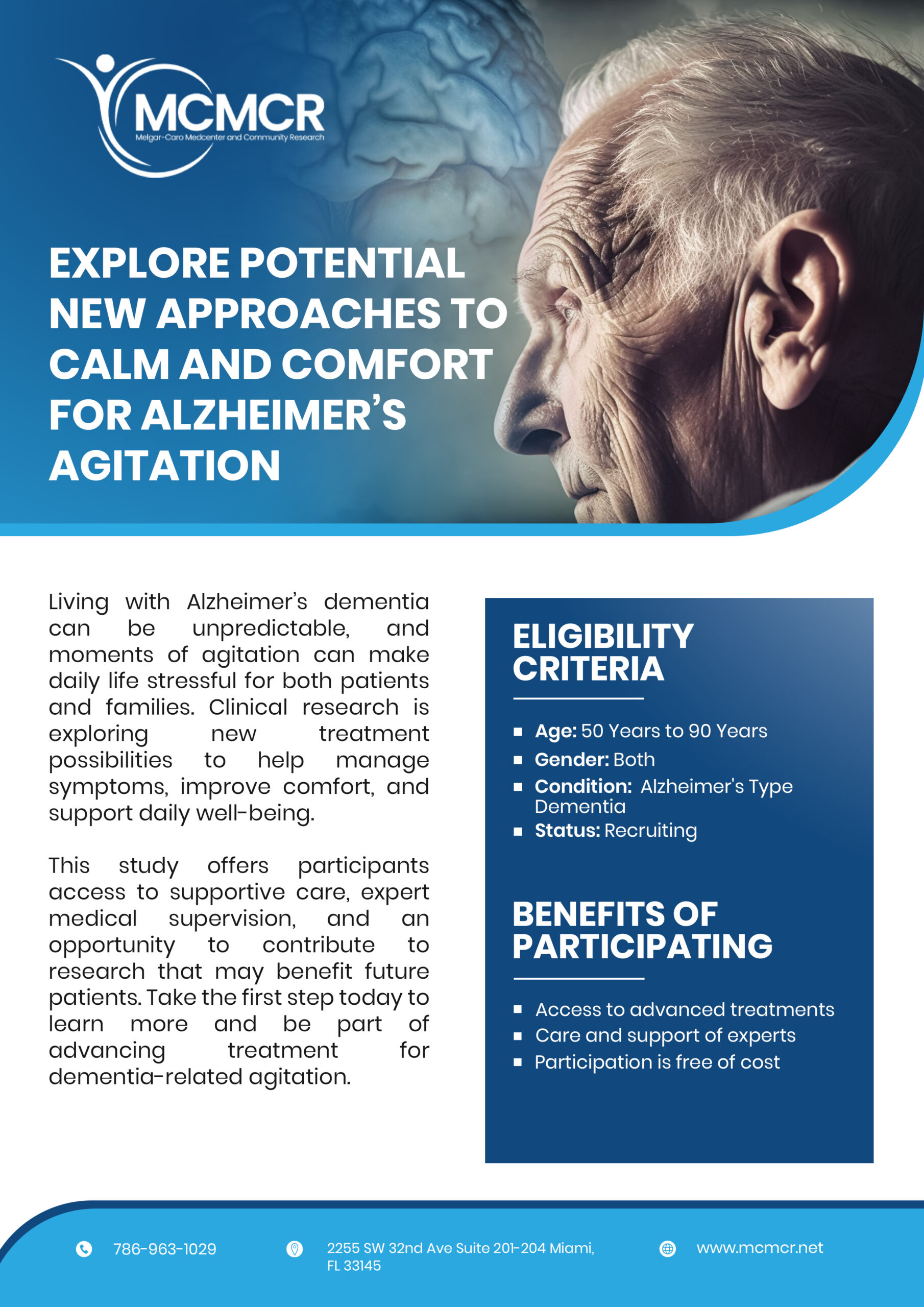
Eligibility Criteria

Age

50 Years to 90 Years

Gender

Both

Condition

Alzheimer’s Type Dementia

Status

Recruiting

Why Participation Matters

This trial may offer access to a potential new treatment for agitation related to Alzheimer’s dementia. Participants contribute to research that may support better understanding, improved care, and possible future therapies for patients facing similar challenges.

Book Appointment
FAQ’s

Frequently Asked Questions

Here are answers to some common questions that help you understand this study more clearly:

Who can join this study?

Eligibility depends on specific health and medical criteria. The study team will guide each interested person through a simple evaluation to confirm if they qualify.

Is the study treatment safe?

All medications used in this trial are tested under strict regulatory standards. Participants receive close medical monitoring throughout the study.

How long does participation last?

Each participant takes part in the 12-week treatment period, along with screening and follow-up steps as outlined by the study team.

What support will participants receive?

The research team provides regular check-ins, safety assessments, and clear guidance to ensure participants stay informed and supported.