Gastroenterology Clinical Trials

Gastroenterology clinical trials aim to explore potential new treatments and improve care for digestive and gastrointestinal conditions.

Discovering Better Treatments for Digestive Conditions

Gastroenterology clinical trials play a key role in understanding how digestive and gastrointestinal conditions affect everyday health. They help researchers test therapies that may improve symptoms and long-term outcomes. Through these studies, patients gain access to potential treatments that are not yet widely available.

These trials are conducted to find safer, more effective options for managing complex digestive disorders. Researchers study how investigational treatments work in real patients to gather reliable evidence. This helps advance medical knowledge and supports the development of therapies that could improve care in the future.

Join the Study to Support Better Liver Health

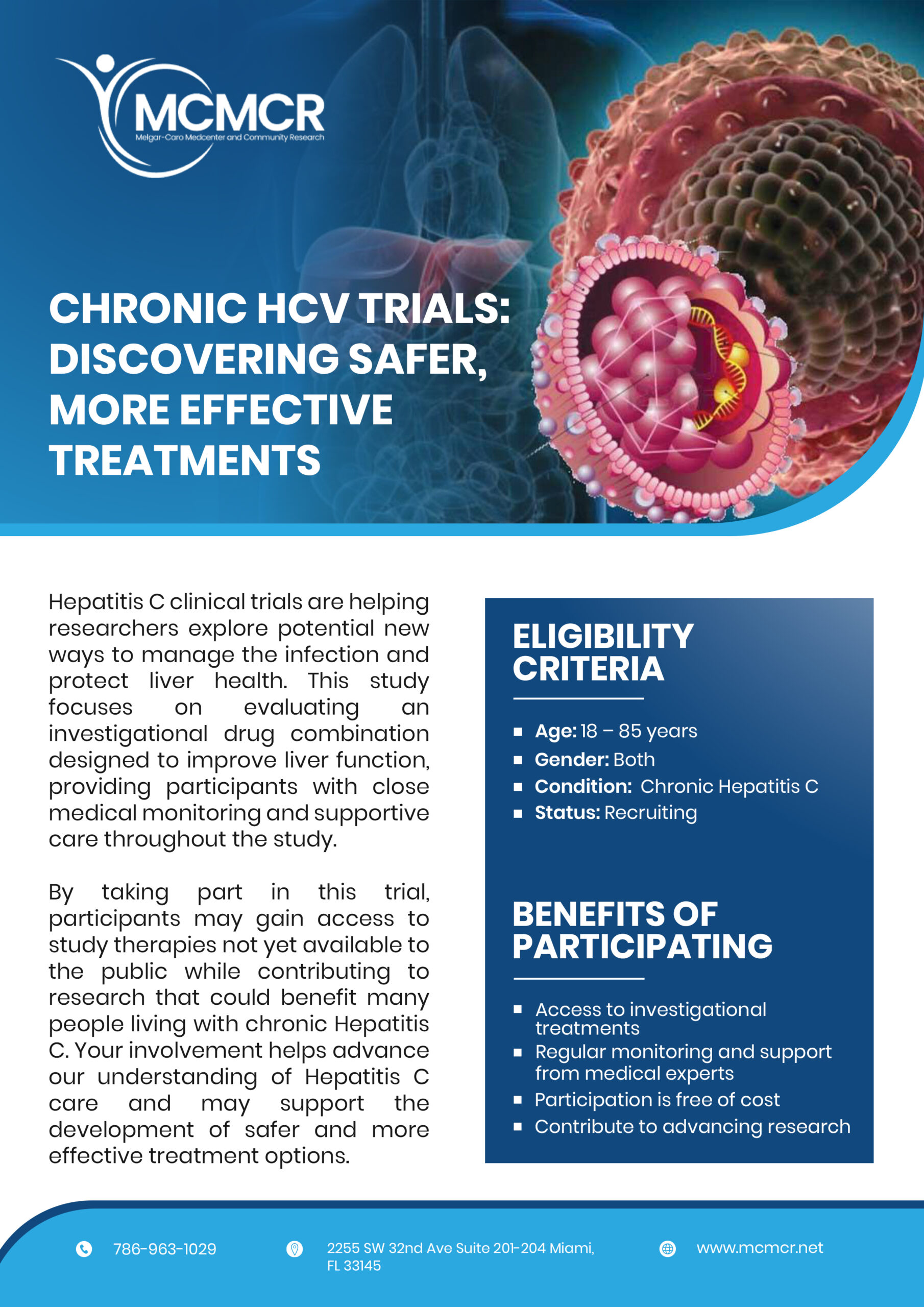
This clinical trial is designed for adults living with chronic Hepatitis C to evaluate a potential new investigational treatment. The study aims to find safer and more effective ways to manage the infection and protect long-term liver health. By joining, individuals may gain access to study treatment while contributing to research that could improve care for others facing similar challenges.

Age

18 – 85 years

Condition

Chronic Hepatitis C

Gender

Both

Status

Recruiting

Enroll Now
chronic HCV clinical trial
FAQ’s

Frequently Asked Questions

Find answers to commonly asked questions about our gastroenterology clinical trials and participation.

What are gastroenterology clinical trials?

They are research studies that test potential new treatments for digestive and gastrointestinal conditions.

Who can join a gastroenterology clinical trial?

Eligibility varies by trial and typically includes individuals with the specific digestive or gastrointestinal condition being studied.

What happens during a trial?

Participants attend scheduled visits, undergo tests, and receive supervised care to track how the investigational treatment works.

Do participants have to pay?

Study-related care and treatments are usually provided at no cost, and some trials may offer compensation.