Agitation in dementia is an extreme source of distress for both patients and their families, often manifesting as restlessness, emotional distress, or aggressive behaviors. While this symptom affects a significant number of individuals with dementia, it frequently leads to caregiver burnout and complicates the delivery of daily care. Effectively managing agitation can help ease symptoms and improve overall care for people with dementia.
Dementia Clinical Trials
Dementia clinical trials are exploring potential new ways to manage this condition more effectively.
Study
Managing Agitation for Better Care

Clinical Research
About this Clinical Trial
While standard treatments exist, there is an urgent need for more effective interventions. Clinical trials help researchers study potential new therapies that may better manage symptoms.
Evaluating Potential Relief for Dementia-Related Agitation
This study is designed to evaluate whether an investigational treatment can help reduce agitation in patients with dementia, as measured by the Cohen-Mansfield Agitation Inventory (CMAI) at 2 weeks. By focusing on this specific metric, researchers aim to provide clear evidence of symptom relief and improved patient comfort.
Get Started
Compassionate Support Throughout the Study
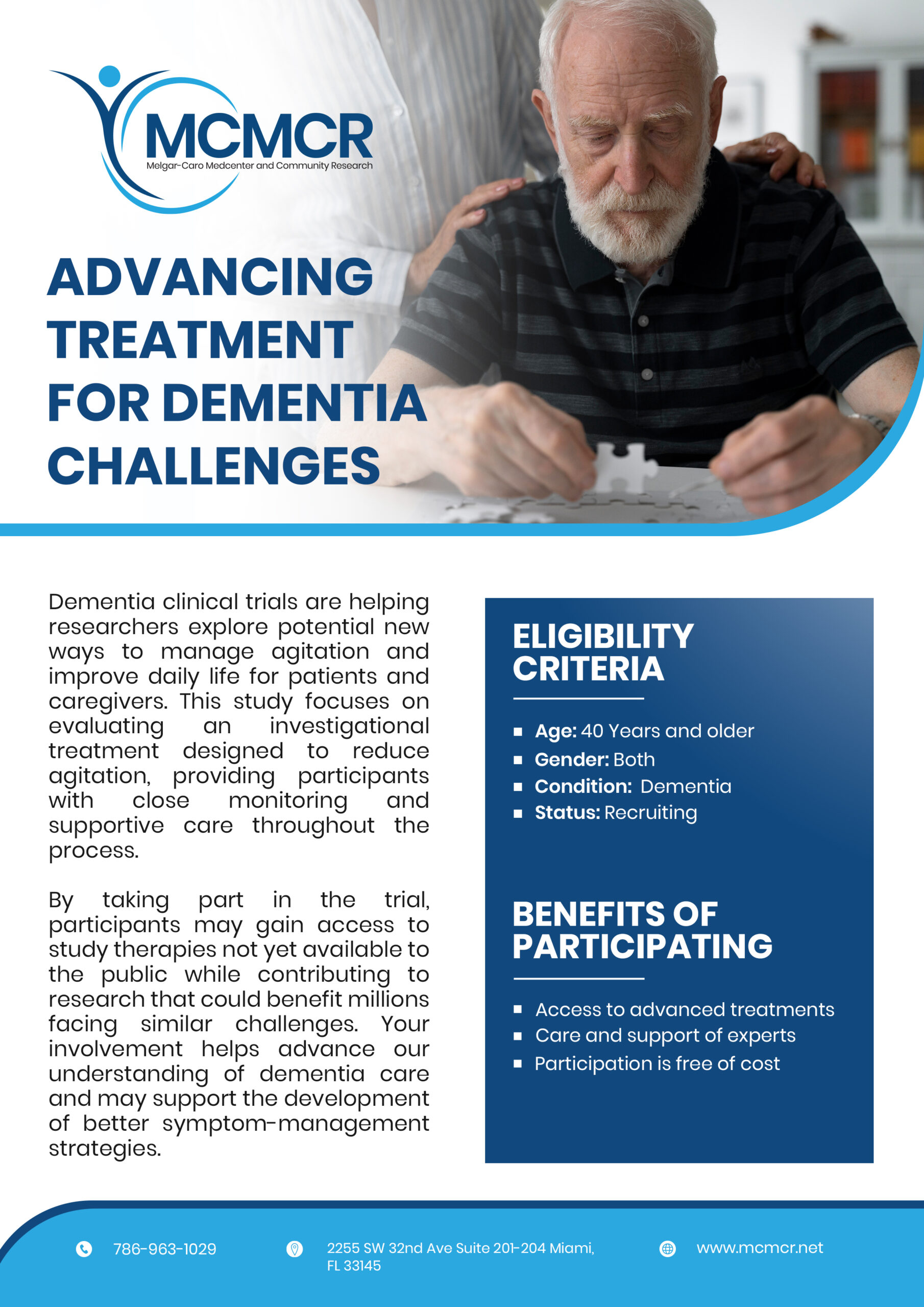
This study will include about 120 participants, age 40 and older, of any gender, who are eligible for hospice care and experience agitation with dementia. The trial welcomes participants with both long-standing and recent symptoms to ensure the results apply to a wide range of people. Clear eligibility criteria help keep participants safe while collecting reliable data.
The main goal of the study is to reduce agitation. Participants are carefully monitored throughout the trial to track progress and any side effects. The treatment is given under controlled conditions to better understand how it may improve behavioral symptoms.
Eligibility Criteria

Age
40 Years and older

Gender
Both

Condition
Dementia

Status
Recruiting

How Participation Makes a Difference
Enrolling in a clinical trial offers patients the unique opportunity to access potential new treatments that are not yet available to the general public. Participants also receive a high level of monitoring and care from a dedicated research team. By joining this study, they help pave the way for better symptom-management strategies that could benefit millions of others facing similar journeys in the future.
FAQ’s
Frequently Asked Questions
Below are answers to some frequently asked questions to help you understand this study better.
Who is eligible to join this specific trial?
The study is open to individuals of any gender who are at least 40 years old and eligible for hospice care with a diagnosis of agitation and dementia.
What is the treatment being tested?
The study is evaluating an investigational treatment designed to help manage agitation in individuals with dementia.
Will every participant receive the same treatment?
Participants are assigned to different study groups based on the trial design, which allows researchers to accurately evaluate the effectiveness and safety of the investigational treatment.
How is the success of the treatment measured?
Researchers use validated clinical assessments to track changes in agitation levels and determine whether the investigational treatment provides significant improvement.